


FNPS Plant Database
Muenchhusia moscheutos
Nomenclature
Common Name:
Synonym(s):
Genus species:
Family:
Malvaceae
Plant Specifics
Form:
Size:
Life Span:
long-lived perennial
Flower Color:
Fruit Color:
Phenology:
Noted For:
Landscaping
Recommended Uses:
Considerations:
Availability:
Propagation:
Light:
Moisture Tolerance:
Stays wet -to- Somewhat moist, no flooding
Salt Water Flooding
Tolerance:
Not salt tolerant of inundation by salty or brackish water
Salt Spray/Salty Soil Tolerance:
Some tolerance to salty wind but not direct salt spray
Soil or Other Substrate:
Sand, Organic
Soil pH:
Suitable to Grow In:
8A,8B,9A,9B
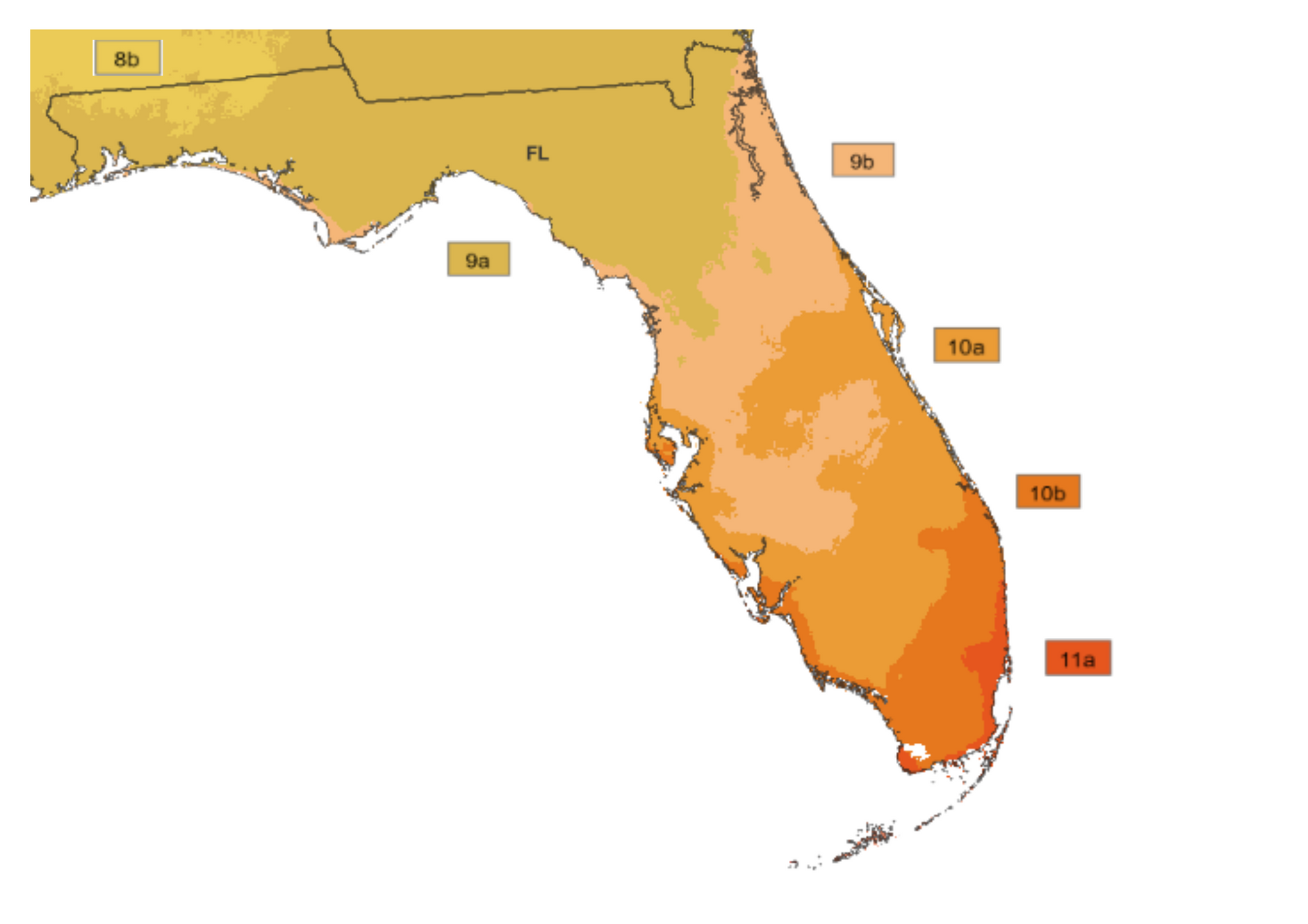
USDA zones are based on the average annual extreme minimum winter temperature.
Don't know your zone? Click here to search by zip code.
Vouchered In:
Ecology
Wildlife:
Larval host of Gray Hairstreak, Painted Lady Butterfly, Common Checkered Skipper and Tropical Checkered Skipper butterflies and four moths : Pearly Wood Nymph, Yellow Scallop Moth, Io Moth, and Delightful Bird-Dropping Moths. Attracts butterflies and native bees (including the Rose-mallow Bee which is a Hibiscus specialist), beetles, etc.
Pollinated by bees, especially bumblebees and solitary anthophorid bees (Ptilithrix bombiformis). Butterflies are attracted to the nector.
Native Habitats:
Comments:
Ethnobotany:
General Comments:
Citations:
Blanchard, O. J, Jr. (1976). A revision of species segregated from Hibiscus sect. Trionum (Medicus) de Candolle sensu lato (Malvaceae). Ithaca, NY: Cornell University. 350 p. Dissertation.
US Forest Service. (2000). Fire Effects Information System Plant Profile: Hibiscus moscheutos. ( https://research.fs.usda.gov/feis/species-reviews/hibmos). Accessed 2026. U.S. Dept. of Agriculture.
Minno, Marc, and Maria Minno. (1999). Florida Butterfly Gardening: A Complete Guide to Attracting, Identifying, and Enjoying Butterflies. University Press of Florida, Gainesville, FL.
Snow, Allison A; Spira, Timothy P. 1993. Individual variation in the vigor of self pollen and selfed progeny in Hibiscus moscheutos (Malvaceae). American Journal of Botany. 80(2): 16W0-164.
Wunderlin, R. P, B. F. Hansen, A. R. Franck, and F. B. Essig. (1999+). Atlas of Florida Plants. ( https://florida.plantatlas.usf.edu/). [S. M. Landry and K. N. Campbell (application development), USF Water Institute.] Institute for Systematic Botany, University of South Florida, Tampa, FL.
