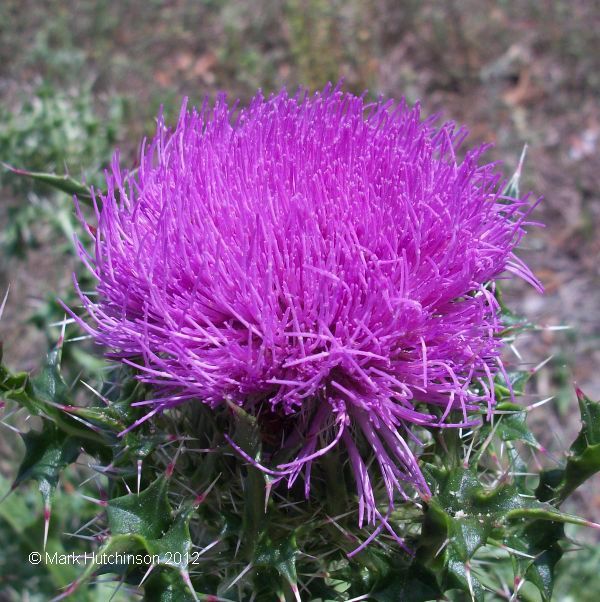
Cirsium horridulum
Purple thistle, yellow thistle
Asteraceae (Compositae)
Plant Specifics
Form:
flower
Size:
1-4 ft tall by 1-2 ft wide
Life Span:
biennial
Flower Color:
regionally variable: white, pink, purple, yellow
Fruit Color:
white
Phenology:
Overwinters as a basal rosette. Blooms in spring.
Noted For:
Showy Flowers, Thorns, Interesting Foliage
Landscaping
Recommended Uses:
Natural landscapes including meadows and butterfly gardens.
Considerations:
Purple thistle is a thorny plant - be very careful when handling.
Light:
Full Sun, Part Sun
Moisture Tolerance:
Somewhat moist, no flooding ---- to ---- Somewhat long very dry periods
Salt Water Flooding Tolerance:
Unknown
Salt Spray/Salty Soil Tolerance:
Some tolerance to salty wind but not direct salt spray
Soil or Other Substrate:
Sand
Suitable to Grow In:
8A,8B,9A,9B,10A,10B
Ecology
Wildlife:
Pollinators, Butterflies, Caterpillars, Birds
- Larval host to little metalmark ( Calephelis virginiensis ) and painted lady ( Vanessa cardui ) butterflies.
- Nectar source for native butterflies and bumblebees. Bees documented in Florida include Evylaeus pectoralis, Halictus ligatus, Lithurgzcs gibbosus, Megachile brevis pseudobrevis , and the non-native Apis mellifera (honeybee) (Deyrup et al. 2002).
- Beetles eat the flowers.
- Provides nesting material for some native bees (based on information provided by the Xerces Society to the Lady Bird Johnson Wildflower Center )
The seeds are rich in oil, an important food source for seed-eating birds.
Native Habitats:
coastal plain, edges of salt marshes, pinewoods, prairies and disturbed areas.

