


Study Names Three New Species of Lupines in Florida
Valerie Anderson • April 16, 2024
A newly published study of lupines in Florida names three new species, all of which are endemic.
The rigorous, exhaustive study also raises the rank of one species variation to the species level, a move that may help conservation efforts to protect the species.
Authors Edwin Bridges and Steve Orzell focused on the unifoliate group of the genus Lupinus in Florida for their study published in Phytoneuron. (Unifoliate species have a type of compound leaf that consists of a single leaflet.) This unifoliate-leaved group is also known to be a clade, meaning its members share a common ancestor.
Bridges and Orzell obtained DNA sequencing data of the unifoliate Florida clade of Lupinus using RADseq, short for restriction-site DNA sequencing. RADseq is a relatively new, cost-effective technology that allows for comparisons of populations at the genetic level.
The researchers combined their genetic data with morphologic, geographic and ecologic data — an approach known as “integrative taxonomy” — to identify the range limits of and relationships among the unifoliate Florida clade. Their data came from 596 herbarium collections and field work at more than 300 sites in 35 counties in Florida.
Their findings led them to recognize eight species in the clade, up from what was previously thought to be three to five species in the clade.
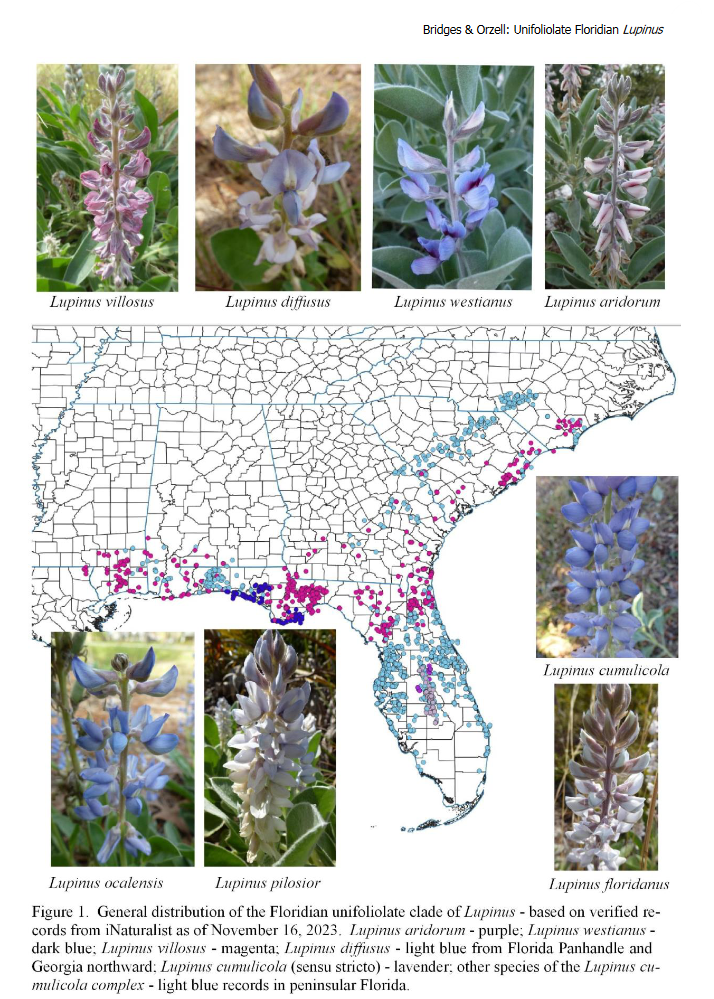
The table below summarizes their taxonomic changes. Also pictured is Figure 1 from their publication showing the species’ distribution.

Image of Bridges and Orzell’s Figure 1 courtesy of Systematics of the Unifoliate Floridian Lupinus Clade (January 2024)
“The reclassification of these plants was a welcomed surprise,” said Mark Kateli, president of the Florida Native Plant Society and Cuplet Fern chapter. “We’d noticed a lot of variation among plants being identified as L. diffusus . Some had larger flowers, some had different hues in their inflorescences and some had different leaf spacing. I rationalized the differences were because the plants were responding to the growing conditions in different habitats.”
A Case for Speciation
Members of the unifoliate Florida clade of Lupinus largely grow on inland sand ridges, coastal sand ridges and uplands in the central peninsula. The ridges and uplands formed as Florida’s sea levels changed over time, and they’re generally fragmented and isolated.Bridges and Orzell report that lupines growing in these geographically isolated areas developed characteristics so unique that they call for classification at the species level. Moreover, each of the species is endemic to its respective area.
The central peninsula of Florida in particular has “endemic-rich inland sand ridges,” they wrote.
L. aridorum’s Future
The survival of one of the newly classified species, L. aridorum , is of great concern. The plant has long been considered very rare, with just a few populations growing in Polk and Orange counties in central Florida. For years, a “persistent lack of consensus” on the plant’s classification made it difficult to assess its conservation status.Bridges and Orzell report that L. aridorum ’s promotion in rank from a variety of a species to its own species calls for a change in status from “Species Globally Vulnerable” (G3T1) to “Globally Critically Imperiled” (G1) (status ranks per NatureServe ). This change in classification could help draw federal and state resources to protect the species.
The study is also likely to raise interest in Florida lupines overall.
“We’re in a new era of native plant systematics and taxonomy,” Kateli said. “With technologies such as large-scale DNA sequencing, we’re able to learn more about the relationships between different native plants, a plant’s conservation status — and the unique place that Florida is in the world.”
Lupinus Gallery featuring observations by Cuplet Fern members
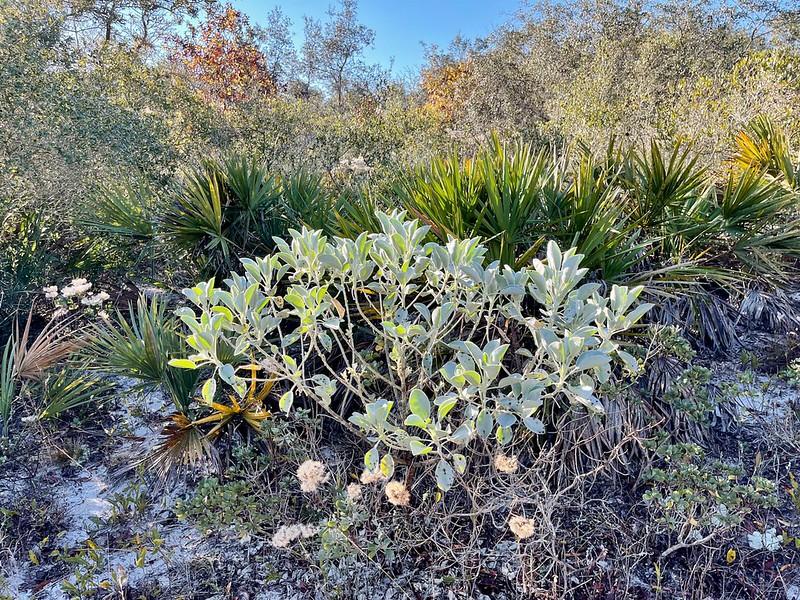
Lupinus cumulicola
(sandhill lupine)
Polk County
Photo by Mark Kateli
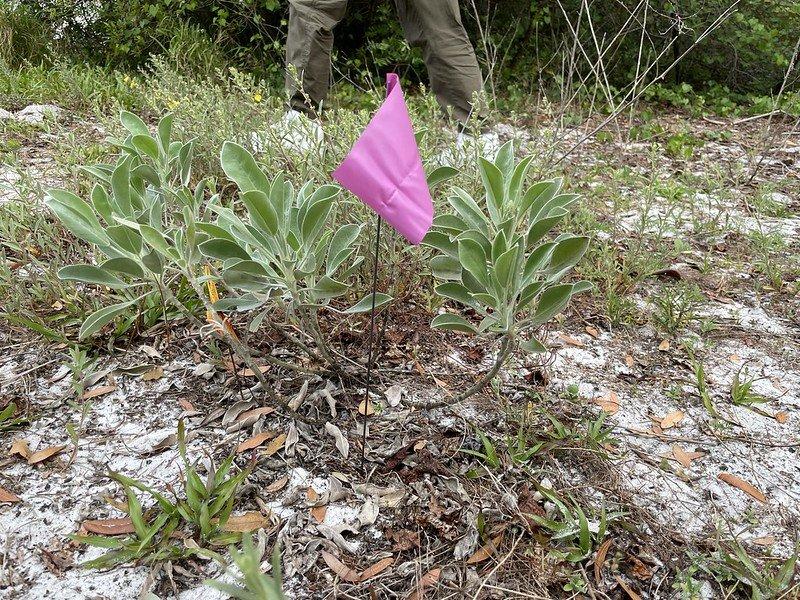
Lupinus aridorum
(scrub lupine)
Orange County
Photo by Jennifer Hopton-Villalobos
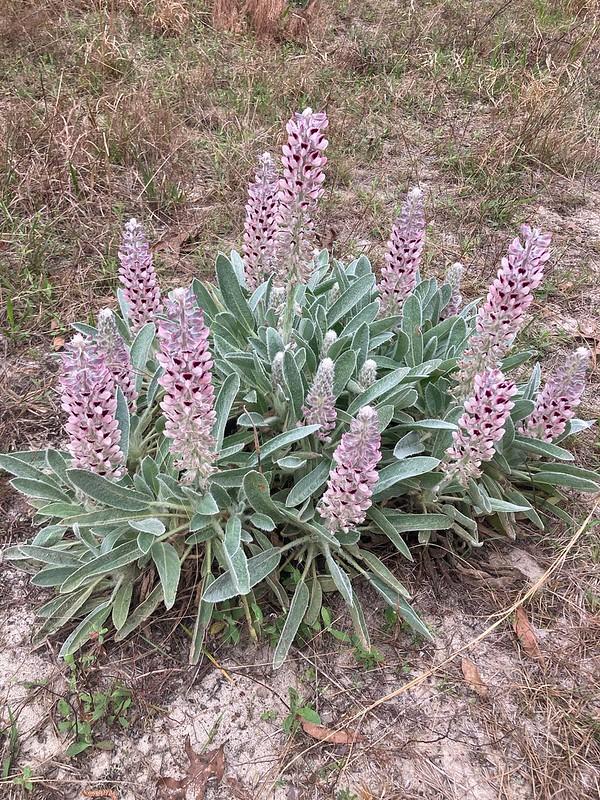
Lupinus villosus
(lady lupine)
Alachua County
Photo by JC Krahling
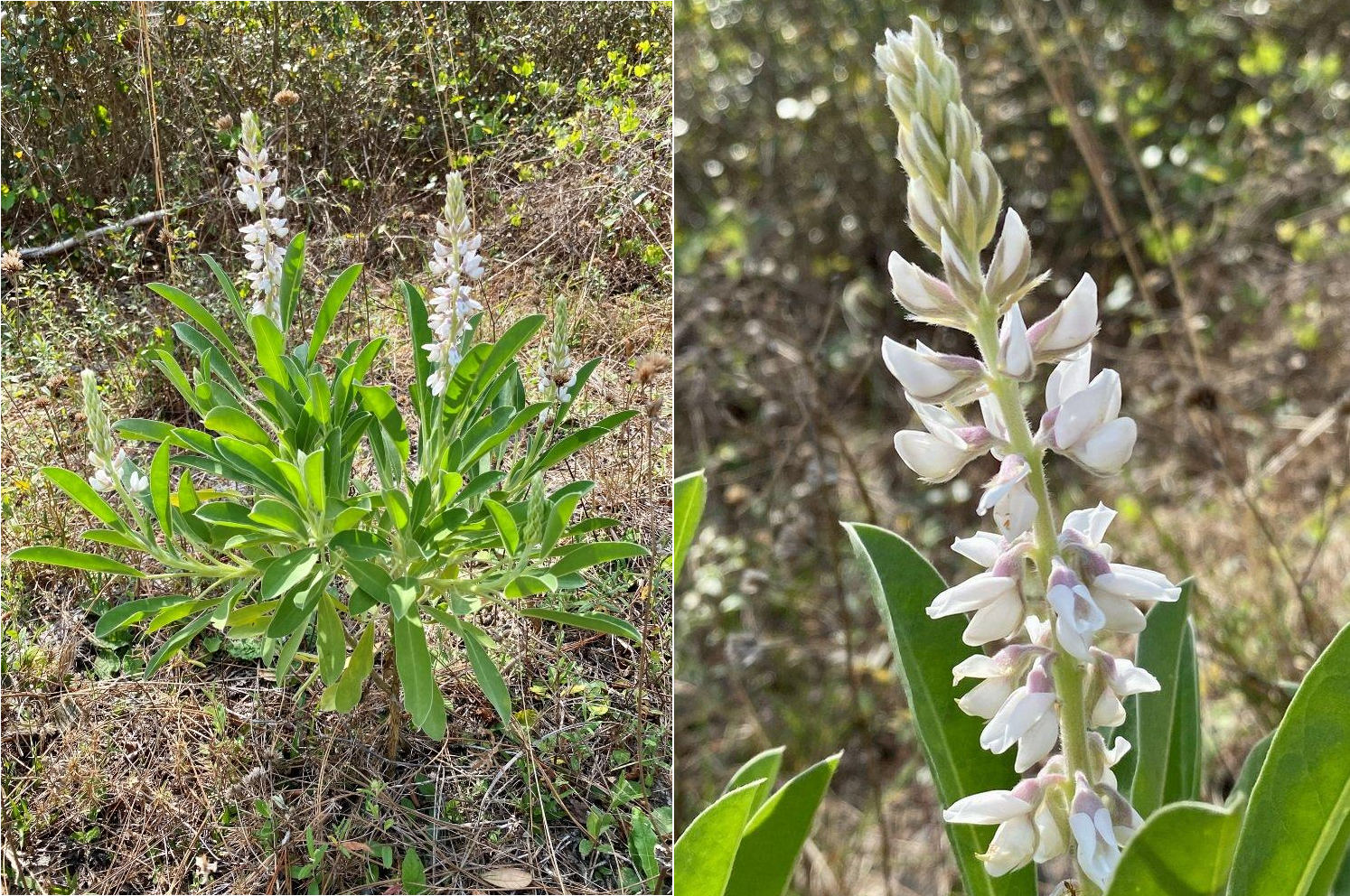
Lupinus floridanus
(Florida lupine)
Geneva Wilderness Area, Seminole County
Photos by Karen Guin
Using iNaturalist, author Edwin Bridges assigned the species names to the first two observations below with a caveat: The plants may be a Lupinus “intermediate” that contains both L. floridanus and L. ocalensis genes. That may be the case with the last observation as well.
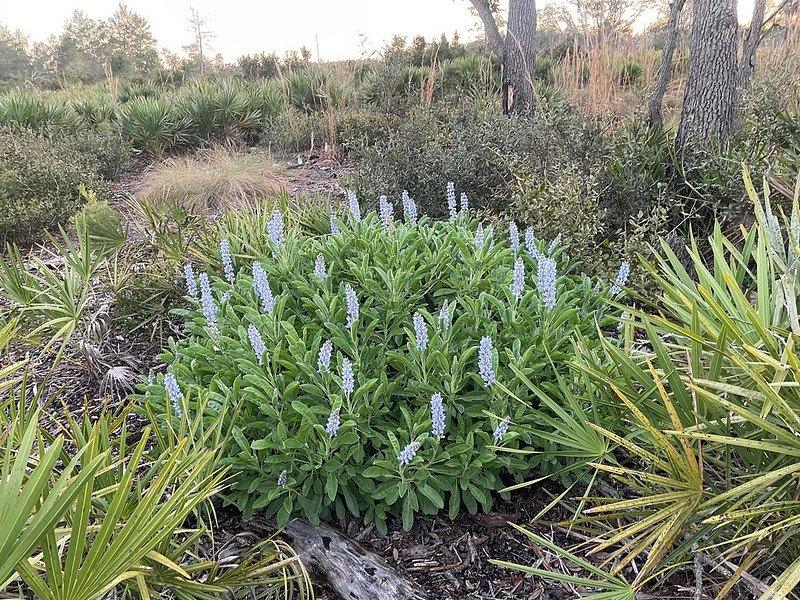
Lupinus ocalensis
Chuluota
Photo by Chelsey Stevens
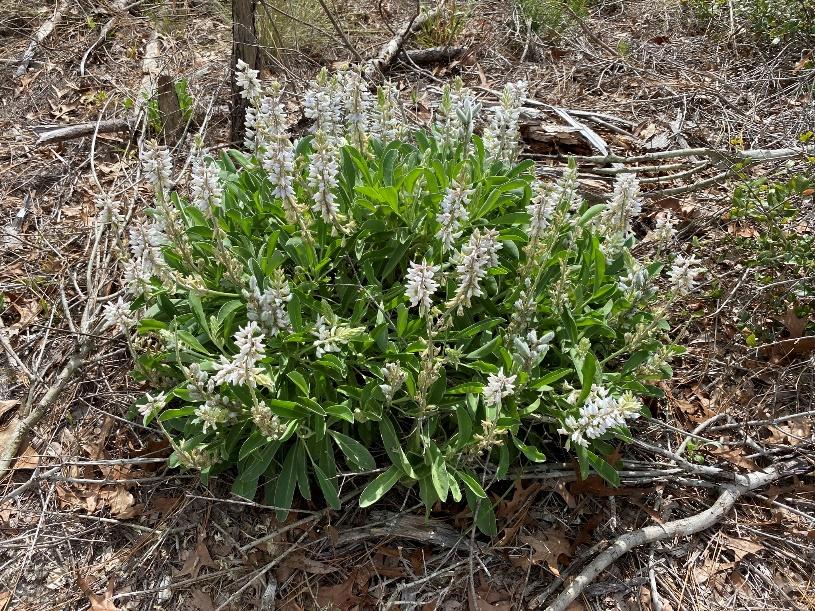
Lupinus floridanus
(or an intermediate with L. ocalensis
, per Edwin Bridges)
Geneva
Photo by Karen Guin
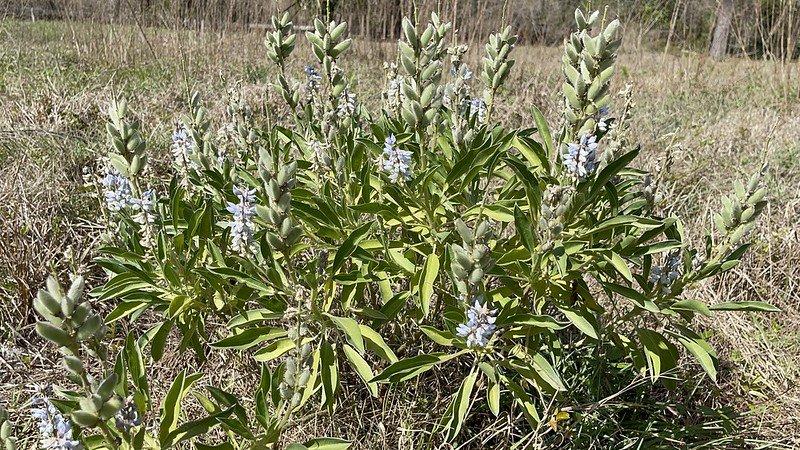
Lupinus ocalensis/floridanus
Geneva
Photo by Mark Kateli
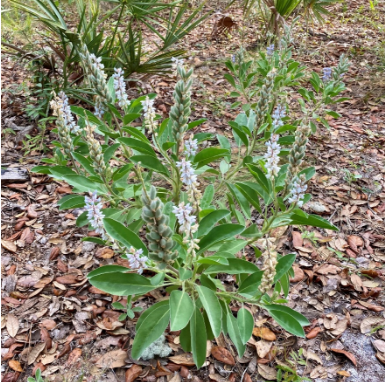
Lupinus floridanus
Chuluota Wilderness Area, Seminole County
Photo by Karen Guin
“It's complicated at this site [Chuluota Wilderness Area]! In one DNA analysis, the sample from this population clusters with L. ocalensis and in another analysis it clusters with L. floridanus. Observations from this site are also split some look more like L. floridanus (like this one), and others look more like L. ocalensis. I suspect that this population has genetic material from both sources. L. floridanus is found at Geneva Hill, and L. ocalensis is found in the Econ sandhills, both only a few kilometers from this site.” – Edwin Bridges (comment made on my iNaturalist observation of a lupine
in Chuluota Wilderness Area)
by Karen Guin, Cuplet Fern Chapter
Share Our Content With Your Friends
RECENT ARTICLES
Saturday, July 26th 10am-12pm The Florida Native Plant Society holds a members meeting once a year. All FNPS members are invited to participate. We provide a year in review and announce grant awards, Palmetto Awards for members and vote on new officers. A link to register has been emailed to all members. Please contact us if you are a member in good standing and have not received a link (info@fnps.org & 321-271-6702) AgendaOPENING REMARKS Introduction by President Eugene KellyOLD BUSINESS Approve the 2024 Annual Member Meeting MinutesNEW BUSINESS Introduction of New FNPS Executive Director (Eugene Kelly)Remarks from the Executive Director (Melissa Fernandez de-Cespedes)Update on the Council of Chapters (Past-Chair: Melanie Simon)COMMITTEE REPORTSConservation Committee (Chair: John Benton)Science Committee and Research Grants (Chair: Paul Schmalzer)Finance Committee (Chair: Ann Redmond)Landscape Committee (Chair: Natalia Manrique)Policy & Legislation Committee (Chair: Eugene Kelly)Education Committee (Chair: Andrea Andersen, Presented by Susan Earley)Conference Committee (Chair: Athena Phillips)Announcement of FNPS Awards (Melissa Fernandez de-Cespedes)Silver Palmetto Awards (Eugene Kelly)VOTE FOR FNPS OFFICERS AND BOARD OF DIRECTORSOverview of FNPS Board Nominees and membership vote (Chair: Chris Moran)Motion to adjourn (Eugene Kelly)2024 MinutesReview them here.
On Monday seventy-three businesses and organizations, including the Florida Native Plant Society, representing every corner of the state sent a letter urging Florida legislators to prioritize certain conservation land acquisition, water quality protection, and resiliency funding during the 2025 legislative session that began Tuesday.We have eight major asks:$500M to Florida ForeverSeparate funding for the Rural & Family Lands Program$30M to the Florida Communities TrustProper supplemental use of Indian Gaming Compact $$$Everglades Restoration$150M for springs restorationCease funding coastal armoring & instead fund Resilient FloridaRepair soon-to-fail wastewater infrastructureRead the full letter here.
A coalition of 70 conservation organizations, including both the Florida Native Plant Society and the Ixia Chapter of FNPS submitted this letter to the lead sponsors of Senate Bill 80 and House Bill 209. Known as the State Parks Preservation Act, the legislation is intended to prevent future attacks on our State Parks – attacks like the one last fall that sparked so much public outrage across Florida.We all appreciate Senator Harrell filing SB08 and Senator Bradley’s co-sponsorship, and Representative Snyder’s sponsorship of the companion bill in the House. The coalition has shared recommended language with the legislation’s sponsors that would more explicitly prohibit such uses as golf courses and hotels, and provide additional guidance to prevent other incompatible uses or developments that would commercialize or materially disturb the resources protected within our Parks.“We just don’t want to be back here again next year, the year after, fighting the same battle, we just suggest that there should be a much-clearer statement on prohibitions of incompatible uses.” -FNPS President Eugene Kelly in the Orlando Sentinel, 2025-02-11, speaking to the Senate Environment and Natural Resources Committee.

