

Florida's Native Plant Communities
Dry Mesic Hardwood
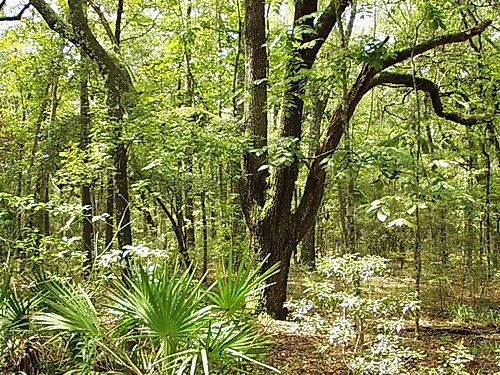
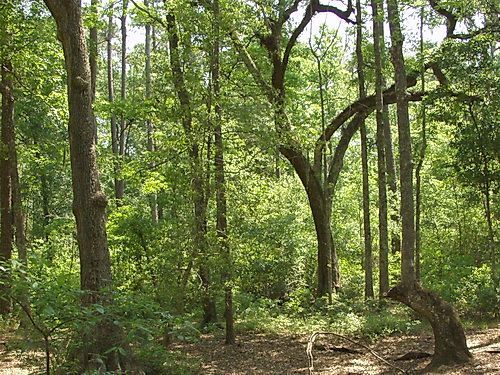
Photographs belong to the photographers who allow use for FNPS purposes only.
Information
Community Variants:
N/A
Description:
A dry-mesic hardwood-dominated community typically occurs on sandy to clayey soils and experiences rare—or no—fire. Vegetation varies with climate, but common species include loblolly pine (Pinus taeda ), live oak ( Quercus virginiana ), laurel oak ( Quercus laurifolia ), southern magnolia ( Magnolia grandiflora ), pignut hickory ( Carya glabra ), red bay ( Persea borbonia ), and other hardwoods.
Good examples of this community can be found at Manatee Springs State Park and San Felasco Hammock State Park.
References:
Duever, L. (1988, Summer). Florida's natural communities: Mesic hammock. The Palmetto, 8(2), 4–5. http://fnps.org/assets/pdf/palmetto/v08i2p4duever.pdf
Florida Department of Environmental Protection. (1992). Soil and water relationships of Florida's ecological communities. http://www.dep.state.fl.us/water/wetlands/delineation/docs/soil-and-water.pdf
Florida Natural Areas Inventory. (2010). Guide to the natural communities of Florida: 2010 edition. Florida Natural Areas Inventory. http://fnai.org/naturalcommguide.cfm
Knight, G. R., Oetting, J. B., & Cross, L. (2011). Atlas of Florida's natural heritage: Biodiversity, landscapes, stewardship and opportunities. Institute of Science and Public Affairs, Florida State University.
Myers, R. L., & Ewel, J. J. (Eds.). (1990). Ecosystems of Florida. University of Central Florida Press.
Simons, R. W. (1990). Terrestrial and freshwater habitats. In S. H. Wolfe (Ed.), An ecological characterization of the Florida Springs Coast: Pithlachascotee to Waccasassa Rivers (Biological Report 90[21], pp. 99–157). U.S. Fish and Wildlife Service.
U.S. Department of Agriculture, Soil Conservation Service. (198-). 26 ecological communities of Florida. http://ufdc.ufl.edu/UF00000110/00001
Whitney, E. N., Means, D. B., & Rudloe, A. (2004). Priceless Florida: Natural ecosystems and native species. Pineapple Press.
Click to learn about different Florida plant communities or scroll through the page to see all the wonderful unique diversity to be explored.
