

Florida's Native Plant Communities
Depression Marsh
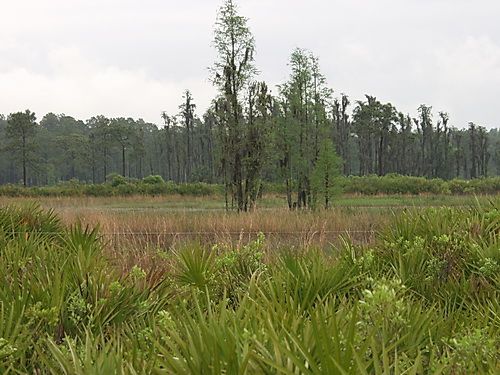
Photographs belong to the photographers who allow use for FNPS purposes only.
Information
Community Variants:
Flatwoods Pond
Description:
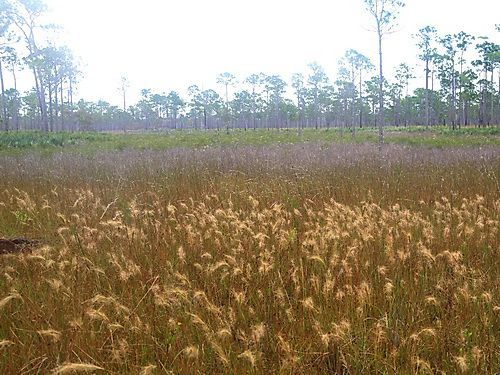
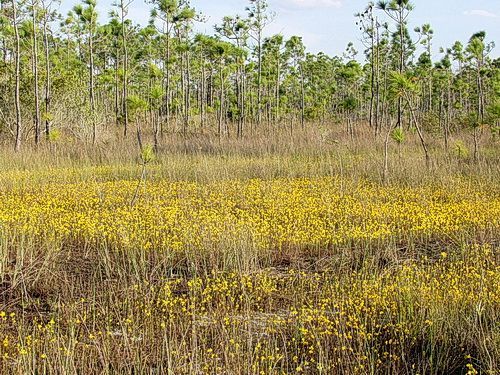
Depression marshes—sometimes called flatwoods marshes—are small, rounded depressions in sandy substrates, often with peat accumulation toward the center. They are seasonally inundated still-water systems that occur in both subtropical and temperate settings. Fire is frequent to occasional and plays an important role in maintaining community structure.
Typical vegetation includes maidencane ( Panicum hemitomon ), fireflag ( Thalia geniculata ), pickerelweed ( Pontederia cordata ), and other emergent species. Frequently, vegetation is arranged in concentric zones, reflecting differences in hydroperiod: inner zones are often monospecific, while the outer transition zone into adjacent flatwoods supports high species diversity.
References:
Clewell, A.F. 1986. Natural setting and vegetation of the Florida Panhandle - An account of the environments and plant communities of northern Florida west of the Suwannee River. Report No. COESAM/PDEI-86/001. United States Army Corps of Engineers, Mobile District, Alabama.
Florida Department of Environmental Protection. 1992. Soil and Water Relationships of Florida's Ecological Communities http://www.dep.state.fl.us/water/wetlands/delineation/docs/soil-and-water.pdf
Duever, Linda. 1987 (Summer-Fall). Florida's Natural Communities: Wet Prairies. The Palmetto 7, #2:6-7. http://fnps.org/assets/pdf/palmetto/v07i2p6duever.pdf
Florida Natural Areas Inventory (FNAI). 2010. Guide to the natural communities of Florida: 2010 edition. Florida Natural Areas Inventory, Tallahassee, FL. http://fnai.org/naturalcommguide.cfm
Gann, G.D., K.A. Bradley, and S.W. Woodmansee. 2009. Floristic Inventory of South Florida Database. Institute for Regional Conservation. http://regionalconservation.org/ircs/database/database.asp
Knight, G. R., J. B. Oetting, and L. Cross. 2011. Atlas of Florida's Natural Heritage - Biodiversity, Landscapes, Stewardship and Opportunities: Institute of Science and Public Affairs, Florida State University, Tallahassee, FL.
Myers, R.L. and J.J. Ewel (eds.). 1990. Ecosystems of Florida University of Central Florida Press: Orlando.
Simons, R.W. 1990. Terrestrial and freshwater habitats. Pages 99-157 in S.H. Wolfe, editor. An ecological characterization of the Florida Springs Coast: Pithlachascotee to Waccasassa Rivers. Biological Report 90(21). United States Fish and Wildlife Service, Washington, DC.
USDA Soil Conservation Service. 198_. 26 Ecological Communities of Florida. http://ufdc.ufl.edu/UF00000110/00001
Whitney, E.N., D. B. Means, A. Rudloe. 2004. Priceless Florida: Natural Ecosystems and Native Species. Pineapple Press.
Click to learn about different Florida plant communities or scroll through the page to see all the wonderful unique diversity to be explored.