


What Do Property Taxes Have to Do With Native Plants?
We Fight for Florida's Future:
Inside FNPS's 2026 Advocacy Wins
By Monaliza Bresko, Mangrove Chapter
Lower property taxes sounds like a good deal. For many Floridians, that may be all they need to hear about Amendment 3.
But a tax cut has two sides. The savings show up on a property owner’s bill. The revenue local communities would no longer collect is much harder to see.
Amendment 3 would significantly expand Florida’s homestead exemption for non-school property taxes and limit how quickly assessments on some non-homestead properties can rise.[1] Florida’s own Revenue Estimating Conference projects that the result would be about $4.95 billion less in local non-school property-tax revenue in the first full fiscal year, eventually growing to approximately $11.86 billion less every year.[1]
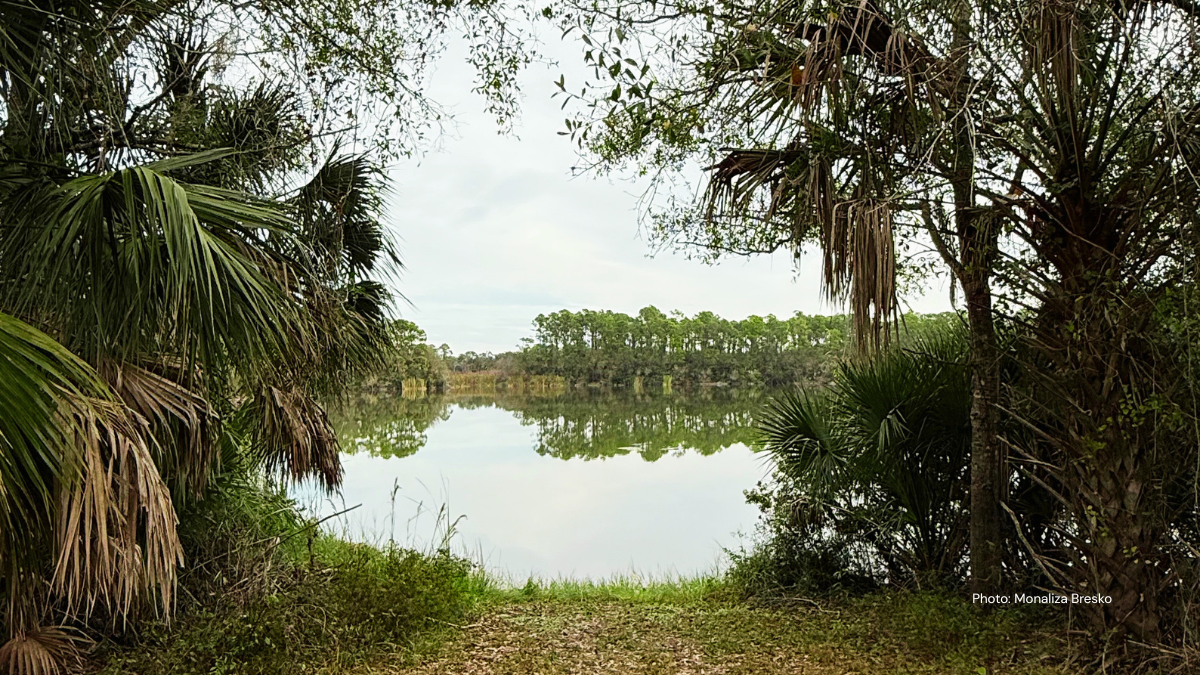
Nearly $12 billion is difficult to picture. A local preserve is not.
What the tax savings don’t show
Think about a park, preserve, wetland, or stretch of natural land in your own community. Protecting that land from development is only the beginning. Florida’s natural areas require continuing care. Prescribed fire keeps fire-dependent ecosystems healthy. Invasive plants have to be controlled. Damaged habitat may need restoration. Parks and preserves require staff, equipment, monitoring, and long-term management.
These connections are not abstract. The same state analysis that estimates Amendment 3’s fiscal impact lists conservation and stormwater management among local-government expenditures, along with parks, recreation, and comprehensive planning.[1]
FNPS’s Board-approved position statement warns that local governments already struggle to keep up with land-management needs such as prescribed burning and invasive plant control. Reducing local revenue by billions would leave those communities making harder choices while roads, public safety, infrastructure, and other essential services still need to be funded.[2]
The same pressure reaches beyond land that is already protected. Cities and counties make decisions every day about growth, development, infrastructure, and land conservation. FNPS argues that weakening local resources while Florida is experiencing intense development pressure puts more of the state’s remaining natural areas at risk.[2]
That risk can be easy to miss because we tend to notice what happens, not what never happened. We see the subdivision after it is built. We do not see the conservation property that was never purchased, the prescribed burn that was postponed, or the restoration project that could not compete with a more immediate budget need.
A lower tax bill is visible. What a community can no longer afford may not become visible until much later.
The same fiscal pressure reaches Florida’s water resources. Florida’s five water management districts help manage those resources, and Florida law gives them authority to levy property taxes to finance that work.[3] FNPS’s position statement specifically raises concern about what reduced property-tax revenue could mean for watershed management, water supply, flood protection, water quality, and restoration.[2]
For native plants, these are not separate issues. A plant community depends on the land beneath it, the water moving through it, the way that land is managed, and whether the habitat remains there at all.
Why is FNPS talking about property taxes?
Many people first encounter FNPS through a native plant sale, a garden tour, a chapter meeting, or a search for something to plant for butterflies and birds. It is easy, then, to think of native plant conservation mainly in terms of what happens in our yards.
But FNPS’s work extends far beyond the garden. Its mission is to conserve, preserve, and restore Florida’s native plants and their habitats through science-based education, research, advocacy, horticulture, landscaping, and participation by members and communities.[4] Its policy work has addressed conservation land, development, water, transportation, and other decisions that can shape Florida’s natural landscape.[5]
Sometimes protecting a native plant means planting one at home. Sometimes it means restoring an ecosystem or protecting a rare species. And sometimes it means paying attention to a policy decision that does not appear to be about plants at all.
Amendment 3 makes its immediate benefit easy to understand: many property owners would pay less.
FNPS is asking Floridians to look just as carefully at what comes next.
Before you vote, read the full FNPS position statement and Florida’s official fiscal analysis. Then ask a more complete question: not only what could Amendment 3 save me, but what could my community become less able to protect?
Because in Florida, protecting native plants means protecting the land, water, and natural systems that allow them to exist.
Sources
[1] Florida House of Representatives, Final Bill Analysis: CS/HJR 1F, Save Our Homes from Excessive Property Taxes, June 16, 2026. The analysis was prepared by nonpartisan committee staff and includes the Revenue Estimating Conference fiscal projections.
[2] Florida Native Plant Society, Position Statement on Amendment 3, approved by the FNPS Board of Directors August 20, 2026.
[3] Florida Statutes §373.503, Manner of Taxation, authorizing Florida’s five water management districts to levy ad valorem taxes for water-resource purposes.
[4] Florida Native Plant Society, Our Mission. FNPS explicitly includes advocacy among the methods it uses to conserve, preserve, and restore native plants and habitats.
[5] Florida Native Plant Society, Policy Position Letters. The current policy archive includes Amendment 3 and FNPS advocacy on land conservation, development, legislation, and related issues.
Give Native Plants a Bit of CPR
Support policy-smart conservation advocacy to protect Florida's habitats for native plants.
Share Our Content With Your Friends
RECENT ARTICLES